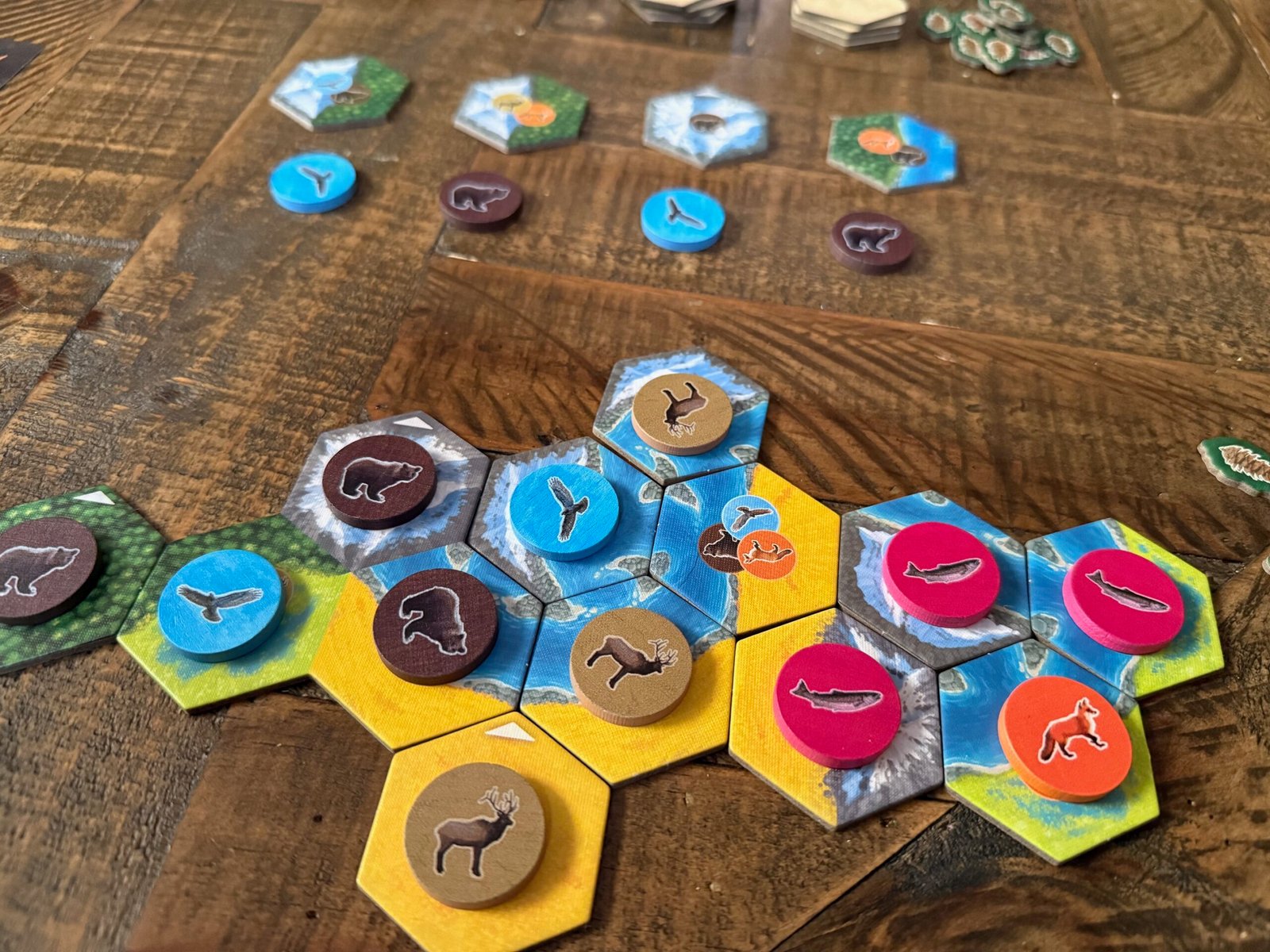
Cascadia Board Game Review – Fun Nature-Themed Strategy Game for up to 5 Players

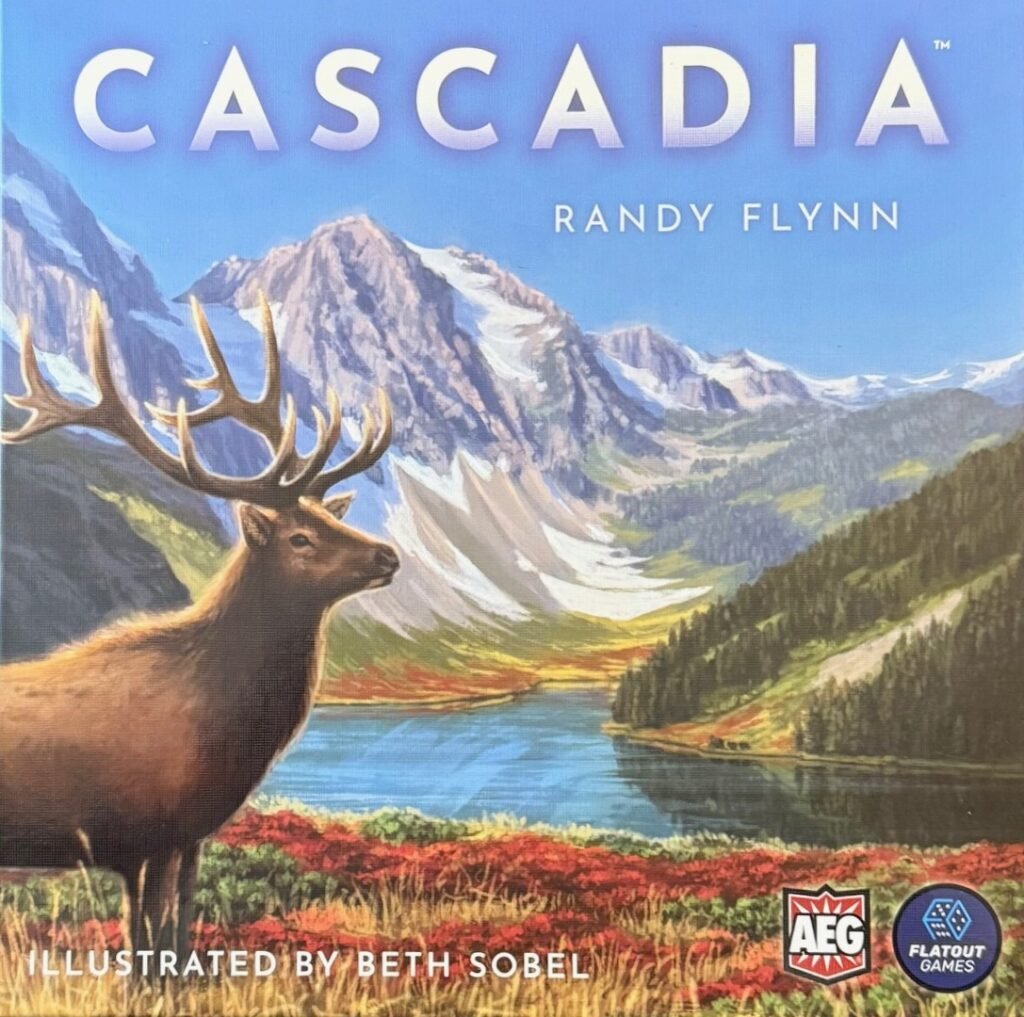
Cascadia is a strategic, tile-laying and token-drafting board game that centers on creating a harmonious ecosystem inspired by the landscapes of the Pacific Northwest. Players work to construct personal, interconnected habitats while populating them with wildlife, aiming to achieve balance and meet specific scoring objectives. The game’s combination of nature-themed design and strategic decision-making offers a thoughtful and engaging experience.
Is Cascadia the right game for you? Keep reading for the Cascadia board game review!
Cascadia: Nature-Themed, Tile-Laying Strategy Game
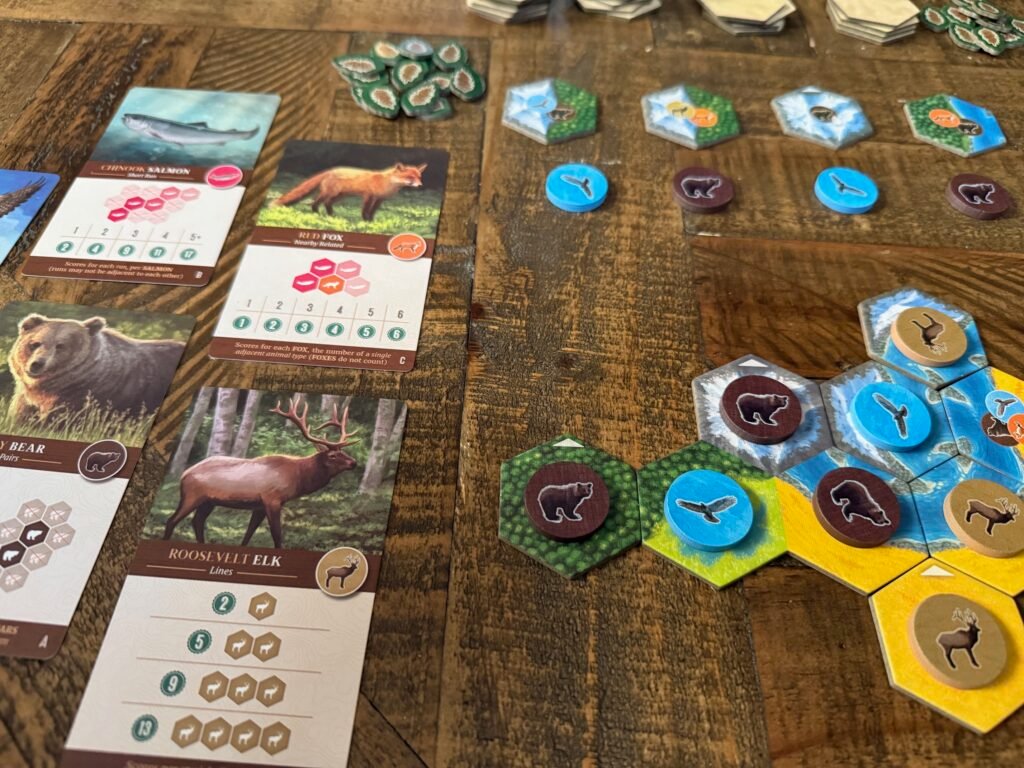
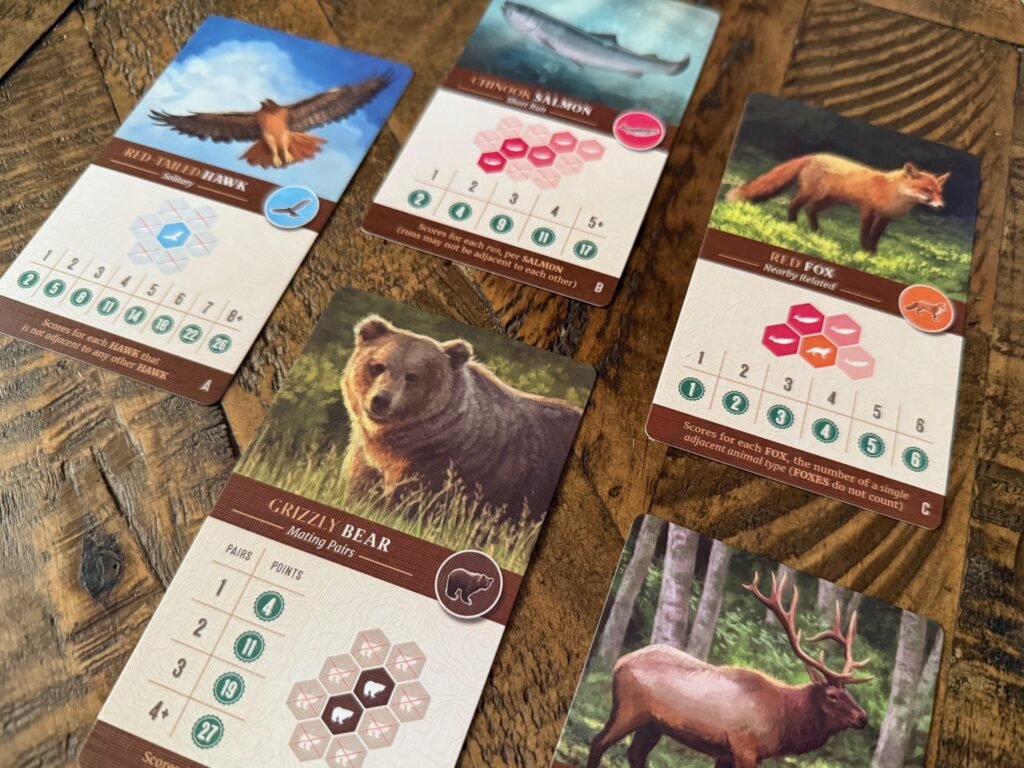
Cascadia is a strategy game where player’s building personal ecosystems using hexagon shapes terrain tiles, representing mountains, forests, prairies, wetlands, and rivers, while animals native to the Cascades region – bears, salmon, elk, hawks, and foxes, are strategically placed into the environments created; with each objective being scoring in different ways. The wildlife scoring cards establish placement rules that vary each game, requiring players to carefully consider how and where to position tokens to maximize scoring opportunities, while also encouraging adaptation and replayability.
The Cascadia Board Game includes sturdy habitat tiles, clearly illustrated wildlife tokens, and cohesive nature-themed artwork. Components are durable and visually distinct, supporting usability and long-term play. Storage solutions and a scoring pad improve setup, organization, and tracking.
Cascadia supports 1–5 players, with a dedicated solo mode. It works especially well with 2–3 players, balancing pacing and engagement. Typical playtime is 30–45 minutes, making it suitable for short sessions or multiple plays in one sitting.
The game is designed to accommodate a range of players, from families and casual gamers to those with a deeper interest in strategy. Cascadia’s blend of straight-forward mechanics and meaningful choices makes it a versatile option for those looking to explore a game that emphasizes personal planning and spatial awareness, within a low-conflict experience.
Explore the Wildlife and Landscapes of Cascadia
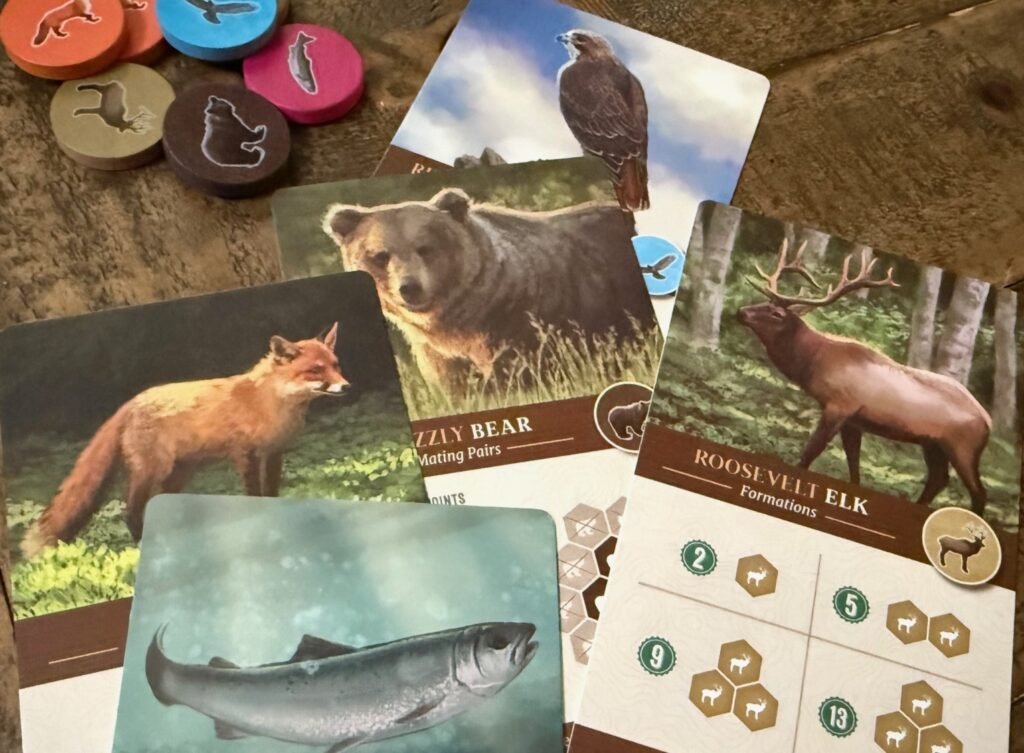 Cascadia’s Wildlife
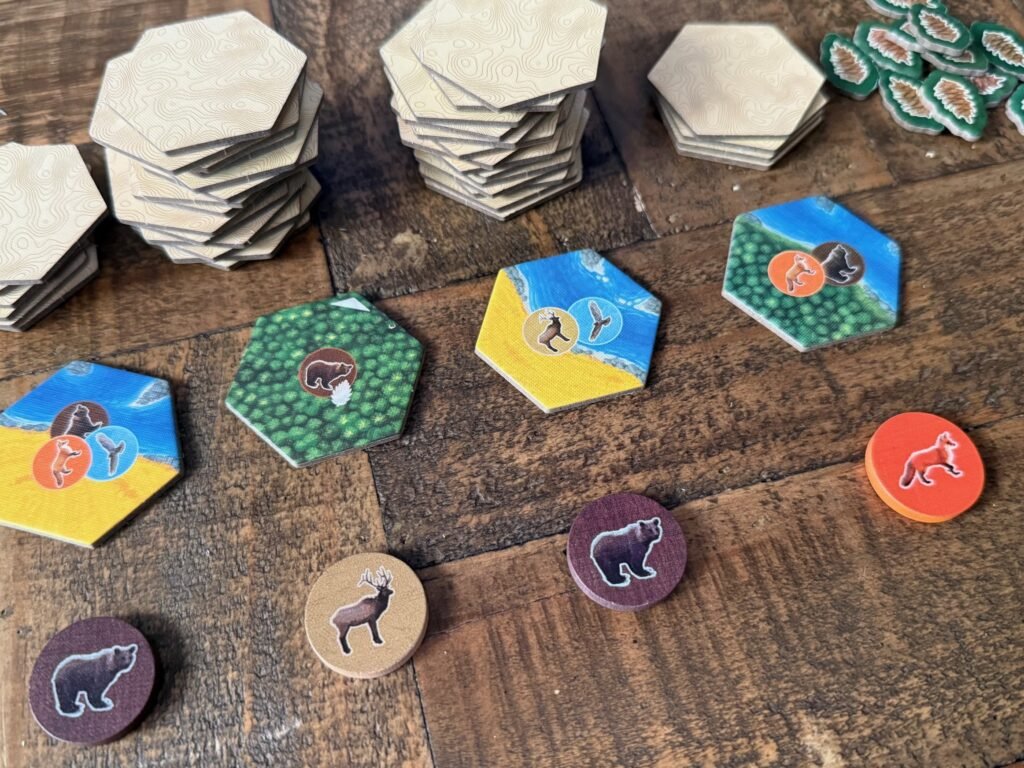 Terrain Tiles
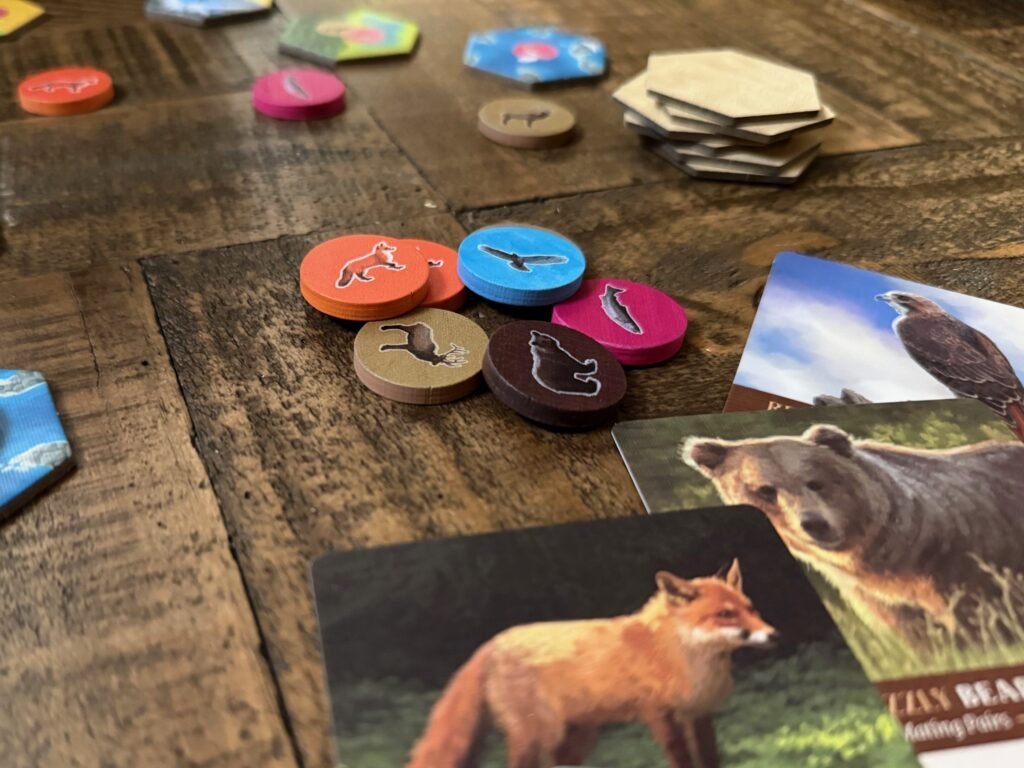 Wildlife Tokens
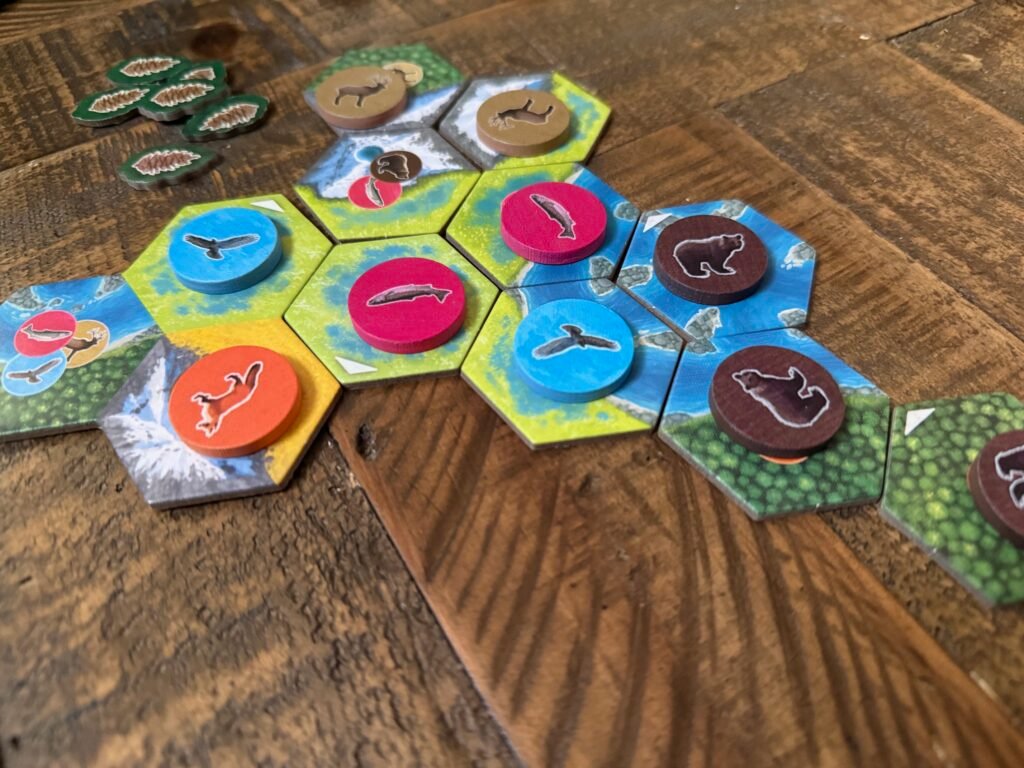
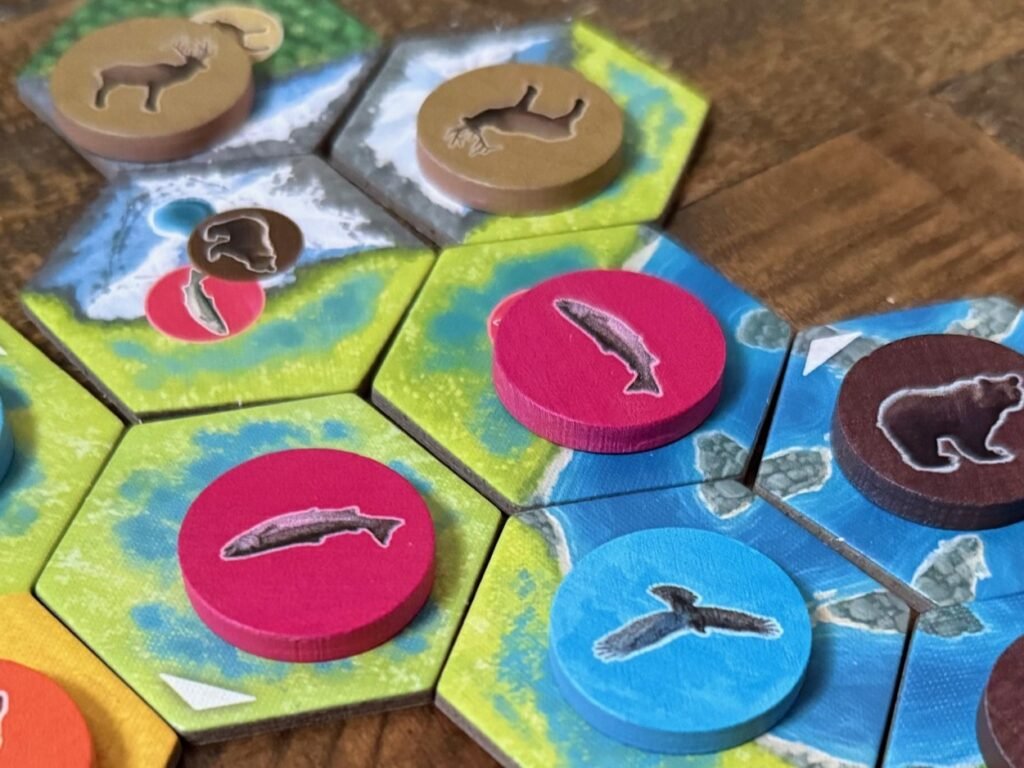 Creating a Habitat
Each turn, players select a pair of one habitat tile and one wildlife token from a shared pool and integrate them into their personal landscape. Tiles expand the landscape, while tokens must follow the species-specific placement rules. Players balance current needs with future scoring opportunities, adapting strategies based on available options and scoring objectives. The variability in tile and token draws ensures that no two games play out the same way, providing a dynamic experience.
The rules are straightforward, with a simple turn structure and clear scoring guidelines. Visual examples and a well-organized rule book support learning. While deeper strategy develops over time, most players can understand the basics in a single session. A simplified family variant and solo mode further improve accessibility.
Strategy and Depth of the Cascadia Board Game
The game’s diversity introduces new challenges and strategic approaches in each session. This setup allows for a modular gaming experience, appealing to players who enjoy strategic depth while maintaining an accessible entry point for beginners. Strategic depth comes from optimizing tile placement and wildlife patterns while adapting to scoring goals. Players must weigh short-term gains against long-term planning and adjust when preferred options are unavailable. This balance supports both casual experimentation and more analytical play styles.
Interaction is indirect, occurring mainly through competition for shared tiles and tokens. There is little direct conflict, resulting in a calm, low-pressure experience focused on personal optimization rather than disruption of others’ plans.
Wildlife scoring depends on species-specific patterns, such as grouping, spacing, or adjacency rules, while habitats score based on contiguous regions. The rotating set of scoring cards ensures variation and encourages different strategies across sessions.
Pros & Cons
Pros:
- Accessible rules and intuitive mechanics
- Modular scoring enhances replayability
- High-quality, durable components
- Supports solo and multiplayer play
- Low-conflict, relaxed gameplay
- Cohesive and appealing visual design
Who’s the game of Cascadia Best For
The Cascadia board game suits players who enjoy calm, strategic games centered on spatial planning and personal optimization. It works well for families, mixed-experience groups, and solo players, and appeals to those who appreciate nature-themed settings and re-playable systems.
Cascadia is also a practical option for players seeking a shorter game experience, as most sessions can be completed in under an hour. This makes it suitable for those with limited time or for incorporating into gaming sessions alongside other light- to medium-weight games. The dedicated solo mode provides added flexibility for individuals who enjoy playing independently while still engaging with the game’s mechanics and strategic challenges.
Cons:
- Limited direct player interaction
- May feel too light for players seeking high complexity
- Slightly slower pacing at higher player counts
Who Might Not Enjoy The Cascadia Game
Players seeking high interaction, direct competition, or heavy strategic complexity may find the Cascadia board game less engaging. Those preferring fast-paced, confrontational, or narrative-driven games may also find the experience too relaxed or understated.
Cascadia Board Game Online Reviews & Sentiment
A Cascadia board game review would be incomplete without including a summary from various online sources, which often highlight the game’s accessible gameplay and nature-themed design as key strengths. Many players appreciate the combination of simple mechanics and strategic depth, noting that the game offers meaningful decision-making without overwhelming complexity.
The modular scoring system and variability in objectives are frequently cited as factors that enhance replayability, as they provide new challenges in each session.
The inclusion of a solo mode has also been positively received, as it offers a tailored experience for individual players.
The quality of the Cascadia board game components, including the sturdy habitat tiles and visually appealing artwork, is another common point of praise. Reviewers often commend the cohesive design, which effectively incorporates the theme of creating harmonious ecosystems inspired by the Pacific Northwest.
However, some feedback indicates that the limited player interaction may not appeal to everyone. The game-play’s focus on individual habitat-building, with minimal direct competition, has been described as a drawback by those who prefer more dynamic or interactive gaming experiences. Additionally, while the game is noted for its accessibility, some experienced gamers mention that the strategic depth may not be sufficient for those seeking more complex or challenging mechanics.
Frequently Asked Questions
Q: Does the Cascadia board game offer a solo mode?
A: Yes, Cascadia includes a dedicated solo mode with tailored scoring goals that mirror the strategic focus of multiplayer play.
Q: Is the Cascadia board game suitable for beginners?
A: Cascadia is accessible for beginners due to its simple turn structure and clear scoring rules.
Q: How long does a typical game of Cascadia take?
A: Most games last between 30 and 45 minutes, depending on player count and familiarity.
Q: Is the Cascadia board game highly competitive?
A: Interaction is mainly indirect, making the game more relaxed than competitive.
Q: Is the Cascadia board game good for families?
A: Yes, the approachable mechanics and low-conflict design make it suitable for family play.
If you are looking for other strategies games, check out our other board game reviews.